
Cyber Resilience Vs Cybersecurity: What You Need to Know
Cybersecurity aims to prevent attacks using controls like MFA, patching, and segmentation, whereas cyber resilience acknowledges that incidents will happen, focusing instead on maintaining service continuity, limiting damage, and achieving rapid recovery. Both are indispensable for comprehensive protection, as prevention reduces likelihood and resilience minimizes impact, forming a complete defense. The article details their distinct scopes, goals, metrics, and ownership, explaining how cybersecurity primarily reduces breach probability while resilience ensures critical services remain operational and are quickly restored.
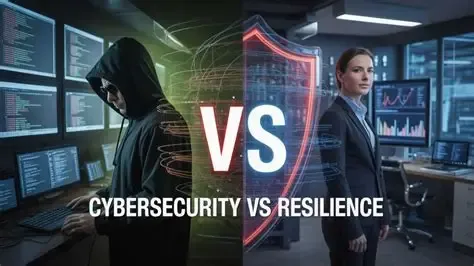
Cybersecurity aims to stop attacks from getting in protecting systems, data, and users from threats like phishing, ransomware, and unauthorised access. Cyber resilience accepts that some incidents will still occur and focuses on keeping services running, limiting damage, and recovering quickly. Put simply: cybersecurity prevents; cyber resilience withstands and restores. You need both to protect sensitive data and maintain operations when something goes wrong. This guide makes the difference clear and practical. We’ll set out cyber resilience vs cybersecurity at a glance, show why prevention and recovery belong together, and break down the key differences in scope, goals, metrics, and ownership. You’ll see common attack scenarios and responses, what to prioritize first, how to build a combined program, the UK and global frameworks to use, and the KPIs that prove progress so you can take confident, concrete steps next.
Cyber resilience vs cybersecurity at a glance
At a glance, cyber resilience vs cybersecurity is prevention versus continuity. Cybersecurity keeps threats out; cyber resilience keeps you operating and helps you recover fast. Together they form a complete defence.
- Focus: Prevent breaches vs keep services running and recover.
- Success: Fewer incidents vs minimal downtime and rapid restore.
- Measures: MFA, patching, segmentation vs backups, failover, rehearsed IR.
Why both matter: prevention and recovery go hand in hand
Prevention without recovery is hope; recovery without prevention is waste. Cybersecurity reduces the chance of a breach with controls like MFA, patching, and segmentation. Cyber resilience assumes some incidents ransomware, DDoS, or human error will still disrupt services, so it emphasizes business continuity, incident response, and fast restore. Together they cut both likelihood and impact: fewer successful attacks, shorter outages, lower losses, and preserved trust. That’s why boards, regulators, and customers expect integrated plans, practiced regularly and measured against clear, shared outcomes.
Key differences: scope, goals, metrics, and ownership
Both aim to cut cyber risk, but they operate on different planes. Cybersecurity hardens systems and stops intrusions; cyber resilience accepts incidents will occur and prepares the organization to keep priority services going and recover quickly. The differences show up in scope, goals, metrics, and who leads design and measure them separately, then integrate the playbooks.
- Scope: Cybersecurity MFA, patching, segmentation; Resilience BCP/IR, backups, redundancies, crisis comms.
- Goals: Cybersecurity reduce breach likelihood; Resilience minimize impact, keep priority services, restore fast.
- Metrics: Cybersecurity incident rate, time to detect, patch SLAs, phishing click rate; Resilience RTO/RPO, time to recover, tested restores, uptime in incident.
- Ownership: Cybersecurity CISO/security with IT; Resilience cross functional (CIO/CTO, continuity, ops, legal, comms) with board oversight.
- Cadence: Cybersecurity continuous monitoring and fixes; Resilience regular exercises, failover drills, lessons captured.
Common attack scenarios and how each approach responds
Seeing cyber resilience vs cybersecurity in action makes the distinction concrete. Below are typical incidents where prevention and recovery play different roles. For each scenario, note how security controls try to stop or limit the attack, while resilience capabilities keep services running and speed the return to normal.
Phishing-led credential theft
Cybersecurity: MFA, email filtering, user training, rapid credential revocation.
Resilience: pre-approved access resets, scoped session kill, stakeholder comms.
Ransomware outbreak
Cybersecurity: EDR, network segmentation, patching, least privilege.
Resilience: immutable/offline backups, tested restores, failover, rehearsed incident response.
DDoS on a public site
Cybersecurity: rate limiting, WAF/CDN, upstream scrubbing.
Resilience: traffic rerouting, scale-out capacity, status comms, continuity workarounds.
SQL injection on a web app
Cybersecurity: input validation, WAF rules, secure coding, patching.
Resilience: rapid rollback, database restore to RPO, post-incident fixes.
Which should you prioritize first?
Start with cybersecurity hygiene that stops routine attacks (MFA, patching, EDR, segmentation) while standing up minimum viable resilience for your crown jewel services (tested offline backups, defined RTO/RPO, an exercised incident plan). Prioritize by risk: if uptime/regulation is paramount (payments, healthcare), weight resilience earlier; if basic controls are weak, raise cybersecurity first then iterate both together.
How to build a combined program
Turn strategy into action with one joined plan that treats cyber resilience vs cybersecurity as two halves of the same program. Start from critical business services, not tools; iterate quarterly; and make recovery as real as prevention. Use this checklist to establish a secure, resilient baseline fast.
- Identify crown jewel services: Map data, processes, and technical/people dependencies.
- Set service targets: Define risk appetite plus per service RTO/RPO and acceptable downtime.
- Assign ownership: CISO leads prevention; continuity lead owns recovery; clarify roles and escalation.
- Implement core controls: MFA, patching SLAs, EDR, least privilege, and network segmentation.
- Build recovery capability: Immutable/offline backups, tested restores, and documented failover paths.
- Prepare and rehearse playbooks: Incident response, crisis comms, and regulator/customer notifications.
- Measure and improve: Track detection/patch times, backup success, and recovery times; report to the board.
Frameworks and standards to use (UK and global)
Use recognized frameworks that pair strong prevention with proven recovery so your cyber resilience vs cybersecurity program is coherent, auditable, and repeatable. Start with a global baseline, then add UK specific guidance. Aligning to these gives you shared language, clear controls, and measurable outcomes.
- NIST Cybersecurity Framework (CSF): Covers Identify, Protect, Detect, Respond, Recover joins prevention to resilience.
- ISO/IEC 27001 + 27002: ISMS and control catalogue for systematic security governance.
- ISO 22301 + ISO/IEC 27031: Business continuity and ICT readiness core resilience standards.
- CIS Controls (v8): Prioritised technical safeguards for fast risk reduction.
- NCSC Cyber Assessment Framework (CAF): UK outcome focused assurance across security and resilience.
- Cyber Essentials/Plus (UK): Practical baseline for common attack prevention.
- Incident response standards (e.g., NIST, ISO/IEC 27035): Plan, exercise, and improve response and recovery.
Resilience building blocks: backup, recovery, and continuity.
When systems fail or ransomware bites, resilience hinges on three disciplines that work together: resilient backups to protect your data, reliable recovery to restore services to agreed targets, and business continuity to keep critical operations going while technology is fixed. Design these around your priority services, set clear RTO/RPO, and prove they work through regular, realistic testing.
- Backups that survive attacks: Immutable/offline copies, coverage for key data and systems, schedules aligned to RPO.
- Recovery you can trust: Routine test restores, measured time to recover against RTO, documented runbooks.
- Redundancy and failover: Replication, alternate environments, and clear switchover procedures.
- Continuity for critical services: Manual workarounds, alternate channels, and minimum viable operations defined.
Security foundations: controls that reduce risk fast.
If you need quick, meaningful risk reduction, start with a handful of high leverage controls. In the cyber resilience vs cybersecurity conversation, these sit squarely in prevention: they stop common attacks, shrink your exposure, and reduce the number of incidents your resilience capability must absorb and recover from.
- MFA everywhere: Prioritize admin, email, VPN, and cloud access.
- Rapid patching: Fix critical vulnerabilities fast; automate and verify updates.
- EDR with containment: Detect, isolate, and eradicate ransomware and malware quickly.
- Least privilege: Separate admin accounts; remove standing access; enforce approvals.
- Segmentation and WAF/CDN: Limit blast radius; protect internet facing apps and APIs.
- Email security and training: Filter phishing; simulate and coach to cut risky clicks.
Measuring success: KPIs for cybersecurity and resilience.
Metrics turn intention into improvement. Track a balanced set that shows whether your cybersecurity controls are blocking routine threats and whether your resilience capabilities keep critical services running and recover to target. Use leading indicators to drive action and board level outcomes to show impact then review after every exercise and real incident.
- MTTD/MTTR: Detection and response time (MTTD, MTTR).
- Patch SLAs met: Critical fixes within target windows (%).
- Phishing failure rate: Users failing simulations (%).
- RTO/RPO attainment: Incidents meeting RTO/RPO targets (%).
- Backup/restore health: Backup success %, restore test pass rate/time.
- Continuity achieved: Uptime during incident; time to BAU.
Third-party and supply chain considerations
Much of your exposure sits with partners, SaaS, and MSPs. Cybersecurity reduces the chance a supplier becomes your attack path; cyber resilience keeps services running if they falter. Treat supply chain risk as integral: tier vendors, set minimum controls, and align recovery targets to your RTO/RPO.
- Contract and assurance: notify fast, audit rights, baseline controls.
- Access boundaries: least privilege, segmentation, monitored third-party sessions.
- Continuity alignment: tested restores, alternates, exit plans.
Cloud, AI, and modern architectures: what changes
Cloud, AI, and modern architectures expand the attack surface and increase the speed of failure. Prevention must be embedded into code and internet facing services, while resilience pivots to automation, redundancy, and repeatable recovery. With AI driven threats and broader attack surfaces, adapt without losing the core split: prevent and recover.
- Cloud: Segment and protect public endpoints (WAF/CDN); keep immutable backups; test cross region failover to RTO/RPO.
- SaaS: Bake controls into contracts; align continuity targets; rehearse export/restore.
- Microservices/APIs: Enforce least privilege and segmentation; support rapid rollback.
- AI: Use AI assisted detection to cut MTTD/MTTR; plan model/data rollback.
Roles, skills, and career paths in cybersecurity and resilience.
Careers span two tracks, with analysts progressing to architects or incident managers. In the cyber resilience vs cybersecurity split, security roles focus on hardening and detection; resilience roles design continuity, backups, and recovery, and coordinate incident response and communications. Ownership typically sits with the CISO/security and IT, while resilience is led cross functionally by continuity/operations, legal, and comms under board oversight.
Avoiding common pitfalls and myths.
Misunderstandings derail programs. The biggest trap is treating cyber resilience vs cybersecurity as either/or. Another is writing glossy plans that nobody tests. Finally, teams buy tools before fixing basics, or assume cloud vendors and MSPs will “handle it” without clear targets, roles, and drills.
- Backups aren’t resilience: Test restores, failover, and continuity.
- Compliance isn’t security: Frameworks help; evidence matters.
- Tools ≠ outcomes: Set RTO/RPO, owners, and practice response.
Cybersecurity prevents; cyber resilience endures and restores. Treat them as a single program anchored on critical services, with clear RTO/RPO, tested backups, and solid hygiene like MFA, patching, EDR, and segmentation. Measure both, practise often, and adjust based on real incidents and exercises.
Learn in-depth about project management when you enroll in our comprehensive project management course led by seasoned professionals. Invest in yourself today.