Regulatory compliance is an organization ability to follow external rules laws, regulations, standards and codes set by government departments, supervisors and industry bodies. In practice, it means building processes, controls and records so your operations, people and data meet those requirements, and you can prove it to auditors and regulators. It protects customers, employees and the public, reduces legal and operational risk, and earns trust. It spans financial conduct and anti-money laundering, data protection, health and safety, product quality and environmental reporting.
You’ve been asked to “own the plan” for a new initiative, the budget is fixed, dates are moving, and stakeholders want certainty. Meanwhile, tasks live in spreadsheets, whiteboards, and heads. Work starts before the team agrees what “done” looks like, and every update turns into a debate. The problem isn’t effort or talent; it’s the absence of a clear, shared plan that aligns goals, scope, people, time, cost and risk.
If your data is wrong, your decisions will be too. Data cleansing (also called data cleaning) is the practical process of finding and fixing problems in a dataset typos, inconsistent labels, duplicates, missing values, and wrong formats and removing records that don’t belong. The goal is simple: ensure your data is accurate, consistent, complete, and usable.
A backlog without structure is just a list of wishes. User story mapping fixes that by giving teams a visual way to organise work around actual user journeys, but doing it on sticky notes or spreadsheets quickly falls apart once a project scales. That's where user story mapping software comes in, giving Business Analysts, Product Owners, and Project Managers a dedicated workspace to plan, prioritize, and collaborate with their teams.
At TITANS CAREERS, we train professionals in Business Analysis and Project Management, disciplines where story mapping is a core part of the toolkit.
You’ve done the hard part graduated and you’re ready to build a career in the UK. Yet the hurdles are real: “UK experience” on every advert, employers uncertain about visas, applications stalling, and a crowded market where it’s not clear which skills actually get interviews. Add the ticking clock of the Graduate Route and limited time to network, and it’s easy to feel stuck between ambition and admin. What you need isn’t more generic advice, but a clear, UK-specific plan you can act on this week.
This guide gives you exactly that. In five practical tips, you’ll learn how to: choose job‑focused training that translates into interviews, map your work rights and visa pathway, prioritize certs that carry weight with UK employers, squeeze the most from your university careers service, and sharpen your CV, search strategy and network for UK results.
Searching for UK visa sponsoring companies shouldn’t feel like guesswork. Yet it often does: outdated lists, pay-walled “databases”, and sponsors that hold a license but aren’t hiring right now. Add shifting 2025 rules, salary thresholds and route nuances, and it’s easy to waste weeks on roles that can’t issue a Certificate of Sponsorship or don’t meet Skilled Worker criteria.
This guide explains how transaction monitoring works within AML compliance programs, the key components of effective monitoring frameworks, and the software tools that power detection systems. You'll learn how to implement monitoring processes, understand regulatory requirements, and discover career opportunities in this essential compliance function. Whether you're entering the field or strengthening your expertise, you'll gain practical knowledge to apply in banking, fintech, and other regulated sectors.
According to the United Nations Trade and Development (UNCTAD), global trade in goods and services hit $33 trillion in 2024. Interestingly, all transactions on the surface, appear to be legitimate but a thorough examination will reveal an integration of financial crime, known as “Trade-based money laundering” (TBML). Criminals exploit the complexity and high volume of international trade to move illegal funds across borders while giving the false impression of conducting legitimate business.
You’re searching for practical, recognized ways to learn cyber resilience skills that prove you can prepare for attacks, keep services running, and recover fast. The challenge is sorting courses that teach real, hands-on resilience (not just theory), align with UK standards, and actually help you get hired. Whether you’re a graduate, a career changer, or a professional upskilling for your current role, you likely need training that maps to frameworks like NIST CSF and ISO 27001, builds incident response muscle memory, and offers clear outcomes, certification, and support.
Navigating the initial steps into cloud security, particularly for those targeting UK roles, can be challenging due to a maze of platforms, costs, and certification promises. This guide simplifies the choice by presenting eight beginner-friendly Cloud Security Fundamentals courses, ideal for career-switchers, international graduates, and newcomers. Each entry details learning outcomes, study format, certification or recognition, pricing, and a specific 'best for' recommendation. Options include Titans Careers, which provides UK-focused career support and practical projects; vendor-neutral paths like Coursera's audit-free basics; and platform-specific training from Google Cloud (offering skill badges) and AWS (instructor-led classroom format).
UK employers are struggling to fill critical roles fast enough, with the latest ONS shortage lists, LinkedIn Workforce Report, and “Priority Skills to 2030” study all pointing to the same pattern: data, AI, cybersecurity, cloud, and sustainability know-how dominate hiring. But in-demand isn’t just about buzzwords; it means high vacancy volumes, salaries above the national median, and skills repeatedly flagged on the Skilled-Worker visa shortage list. This article ranks the Top 20 in-demand skills for 2025, complete with salary snapshots, job titles, and practical upskilling paths, even if you never studied computer science. Pairing tech expertise with people skills like communication, empathy, and critical thinking is now the real employability multiplier, defining who thrives in Britain’s workforce of tomorrow.
Discover how cybersecurity and data protection work together to defend companies against cyber threats, ensure regulatory compliance, and build customer trust in the digital age.
Scrum provides a structured yet flexible approach to managing complex projects. Businesses that embrace Scrum enjoy faster time-to-market, improved teamwork, and greater responsiveness to customer needs making it an essential methodology for modern project success.
The cybersecurity battle is real! Cybercriminals are working round the clock to ensure that AI is optimally utilized for their nefarious activities and security professionals are not just resting on their oars to neutralize the threat but to ensure same is detected on time with prevention measures put in place. Despite the seemingly ‘advantages’ AI provides attackers, it is still not a silver bullet that guarantees success. Both attackers and defenders face limitations using AI.
Discover the best data visualization tools and techniques for 2025 to turn complex data into stunning visuals, ideal for UK businesses and professionals.
Breaking into data science is exciting but the path can feel messy. Should you do a master’s, a bootcamp, or self-study? Which tools actually matter? Why do UK job ads ask for years of experience, and how do recruiters, right-to-work checks, and GDPR fit in? If you’re a graduate, a career changer, or arriving from overseas, it’s easy to lose time on the wrong skills and miss what UK employers hire for.
Learn how criminals recruit money mules through job scams and romance fraud. Discover red flags, protection strategies, and what to do if you're targeted or already involved in money muling activities.
Sanctions screening is the control that checks customers, counter-parties, suppliers, owners and payments against official sanctions lists and related rules so you don’t do business with prohibited parties. It sits at the heart of AML and trade compliance: collect reliable identifiers, compare them to current lists, resolve potential matches, and block or license activity where required. Done well, it limits fines and criminal exposure, protects access to banking, and guards reputation in a regime that can change by the hour.
Being overtly over-optimistic during planning affects both experienced and amateur project managers because humans generally underestimate how long tasks will take and the number of challenges that will arise during execution. The planning delusion causes project managers to focus on best-case scenarios where everything goes smoothly rather than on realistic scenarios that account for inevitable delay, and complications that are present in real projects.
Regulatory compliance means making sure your organization follows the external rules that apply to it laws, regulations, codes and industry standards and can prove it. It’s not just knowing the rules; it’s building policies, controls, training and records so your day-to-day operations meet those obligations. Done well, compliance reduces legal and financial risk, protects customers and data, and strengthens trust with regulators, investors and partners.
RegTech, or regulatory technology, is transforming financial compliance by using software, data, and AI to automate tasks like KYC, AML, and regulatory reporting, moving from a niche to a must-have. This rapidly expanding sector offers well-paid, resilient career opportunities for professionals from IT, data, legal, and operations backgrounds. Key roles such as RegTech Product Managers, Data Scientists, and Compliance Analysts require a strong blend of technical skills (e.g., Python/SQL, cloud), regulatory knowledge (AML/KYC, GDPR), and crucial soft skills like stakeholder management.
The work is half complete! Your best developer has suddenly taken ill, 70% of the budget has been spent and the worst part, you’re two weeks behind schedule. What!!! Well, it happens and a sudden sinking feeling immediately overwhelms you, viciously attacking your mental and physical health. This is better imagined than experienced and project managers can attest to this. This scenario clearly paints the picture of the absence of ‘resource management’.
Over the years, the advancement in technology and across the digital sphere has triggered the rise in cyberthreat. In terms of digital security, passwords used to be the ideal standard, not until it succumbed to attacks. Data breaches pose grave danger to individuals and companies as it exposes a huge ton of credentials and cybercriminals have developed high end techniques to crack complex passwords. To confront this challenge, multi-factor authentication emerged and requires users to provide different forms of verification before gaining access to systems. MFA adds important layers of security that makes it challenging for attackers to compromise users accounts.
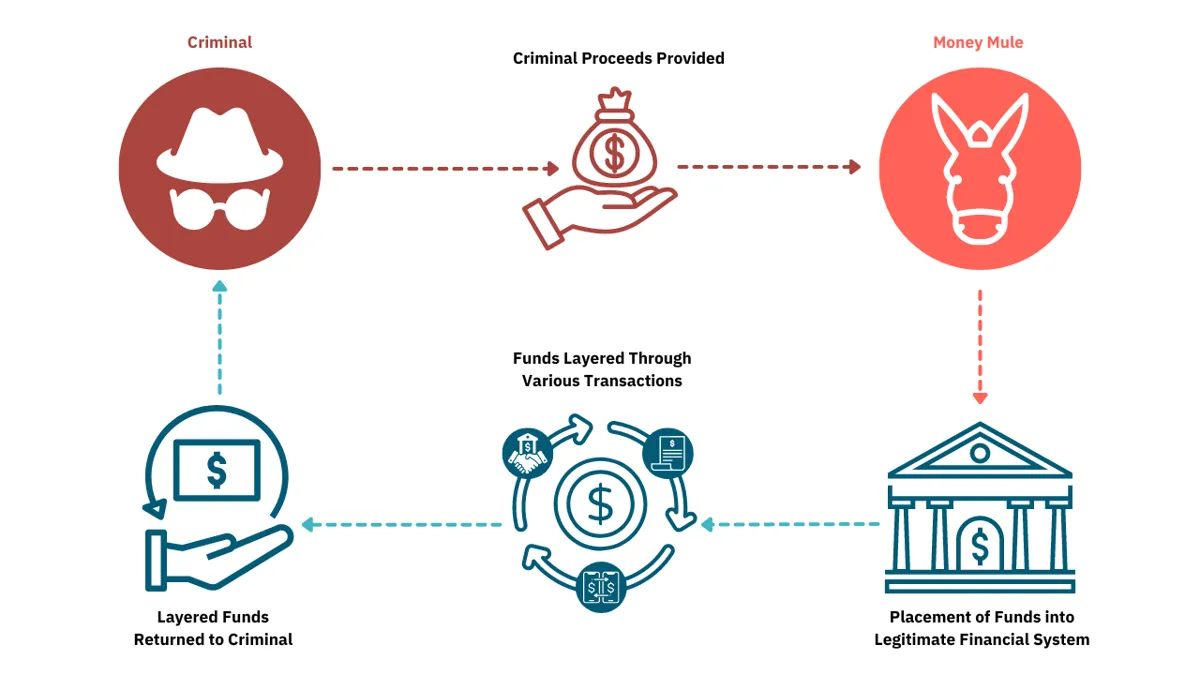
Explore how money muling has become AML's fastest growing challenge, with criminals exploiting digital platforms and vulnerable individuals to move illicit funds while evading detection.
Real estate is one of the preferred avenues that criminals seeking to legitimize illegal funds leverage on to exploit its weaknesses. This sector provides certain perks for money launderers which other industries struggle to keep up with. A transaction with regards to the purchase of a property, requires a large sum of money, which makes it easy for criminals to integrate a substantial amount of dirty cash into the system without raising any form of suspicion.
Know Your Customer (KYC) is a crucial set of checks firms use to verify identity, understand customer activities, and mitigate financial crime risks like money laundering and terrorist financing, forming a core part of UK anti-money laundering (AML) rules. It involves four pillars: Customer Identification Program (CIP), Customer Due Diligence (CDD), Enhanced Due Diligence (EDD) for higher risks, and ongoing monitoring. For individuals, verification typically includes photo ID, proof of address, and biometric checks. For businesses, known as KYB (Know Your Business), it extends to confirming legal existence, identifying Ultimate Beneficial Owners (UBOs) and Persons with Significant Control (PSCs). The process is risk-based, requiring deeper checks for Politically Exposed Persons (PEPs) and continuous sanctions screening.
Discover how AI has revolutionized KYC processes, reducing verification times from weeks to minutes while achieving 99.5% accuracy in document authentication and cutting operational costs by 40%.
Mastering IT project management requires a comprehensive toolkit of both technical and soft skills, moving beyond mere buzzwords to demonstrable, outcome-driven evidence. This guide details 19 crucial capabilities, explaining each skill's definition, why employers value it, and effective strategies for showcasing it on CVs and LinkedIn with quantifiable results and specific tool usage. Essential soft skills highlighted include communication, leadership, adaptability, negotiation, and robust time management.
An IT career acceleration program is a focused, timebound pathway designed to move you into a job-ready tech role as quickly as possible. Unlike a traditional degree, it blends targeted training with practical projects, portfolio building, optional certifications, and structured career support such as CV reviews, interview prep, and mentorship. The goal is clear and measurable: help you transition into roles like Business Analyst, Project Manager, Cybersecurity Analyst, Data Analyst, or AML/KYC specialist in months, not years.
This comprehensive guide outlines a 17-step, repeatable system for excelling in job interviews and fostering career growth, particularly within the UK hiring landscape. It moves beyond generic responses, advocating for a structured approach that ensures candidates confidently demonstrate their value. Key steps involve defining a clear career story, meticulously decoding job descriptions to identify core competencies, and conducting targeted research on employers, sectors, and interviewers. The guide stresses crafting evidence-led answers using frameworks like STAR for achievements, preparing concise personal pitches, and honestly addressing strengths, weaknesses, and sensitive topics. It also covers anticipating role-specific technical questions, preparing insightful questions for the interviewer, and mastering delivery across various formats (phone, video, face-to-face, assessment centers) while adhering to UK etiquette.
Continuous upskilling is fundamental for individuals and organizations to maintain relevance and competitiveness in a dynamic environment. It involves enhancing existing skills (upskilling), learning entirely new ones (reskilling), and acquiring adjacent capabilities (cross-skilling). For individuals, this commitment boosts employability, career mobility, and earning potential. For businesses, it significantly improves productivity, retention, and fosters innovation and agility, demonstrating a clear return on investment measurable through key metrics like output per FTE and internal fill rates. Prioritizing in-demand skills for 2025, such as AI literacy, data fluency, and crucial soft skills, is vital. Effective personal plans require defining specific outcomes and deliberate practice, whilst organizations must cultivate a learning culture by aligning learning with strategic goals and empowering managers.
Learn essential steps to respond to and recover from ransomware attacks so you can protect your business from cybercriminals without paying ransom demands.
Money laundering is real! It is a menace that thrives in complexity, anonymity, and transcends borders. Therefore, it is important that real estate professionals and compliance officers must understand how money laundering activities operate in real estate and engage in ways to prevent same from happening.
Searching for problem solving skills training can feel noisy: endless courses, clever buzzwords, and promises of “critical thinking” without clear proof of results. Some options are too generic, others too technical, and many skip the hands on practice that actually changes how you work. Add UK specific questions about accreditation and industry relevance, and it’s hard to know what will genuinely improve your analysis, decision making, and impact at work.
There’s a better way. Start by defining what “effective” means for you outcomes, role fit, and measurable gains then look for courses that teach proven methods and make you apply them through real cases, feedback, and coaching. Check that the credentials are recognised in the UK, teaching quality is evidenced, and the provider offers career support that aligns with your goals. Finally, compare cost, time and ROI and test before you commit.
The article outlines a comprehensive 10-step roadmap for UK career changers seeking to upskill strategically and secure new roles. It begins by guiding individuals to define their personal 'why', constraints, and success metrics, followed by an audit of transferable skills, reframing them for a new domain. A critical phase involves validating target roles against current UK hiring demand and conducting a job-ad-led gap analysis to pinpoint essential missing skills and tools. The roadmap then advises on selecting a UK-recognized certification and building a focused 90-day upskilling plan, prioritizing the creation of tangible proof through projects, case studies, and a public portfolio. To bridge the experience gap, the guide advocates for targeted volunteering or micro-internships.
Becoming a compliance officer in the UK can feel confusing. Different sectors follow different rules, acronyms pile up (FCA, SM&CR, UK GDPR, AML), and advice varies on whether you need a law degree, certifications, or prior experience. If you’re a student, a career switcher, or an international graduate, the pathway isn’t always obvious.
Many years ago, transitioning to another career was viewed by nay sayers as an impossible feat. Those who wanted to transition were afraid of being ridiculed or verbally assaulted by family and society for having no sense of purpose with regards to the chosen career. Opting for a totally different career path was absurd and laughable. As a result of the negative trend that trailed the declaration of interest to transit, victims reluctantly joined the bandwagon and once more realigned their mindset to the “one profession for life”.
Finding a role with a genuinely good culture in the UK isn’t easy. Job ads promise a ‘family feel’ and ‘fast-growing teams’, yet the reality can be long hours, vague priorities and limited support. Culture sits behind pay and title: it shapes your energy, learning and progression. The challenge is separating marketing from evidence before you sign.
This guide gives you a practical way to do that. You’ll build a scorecard, learn UK-specific signals of healthy workplaces, and verify claims with data, policies and real people. We’ll show you how to read between the lines of job adverts, use credible rankings, examine leadership behavior online, and test culture throughout hiring.
Over the past decade, the cryptocurrency market has been marked with unparalleled growth which has culminated into a booming industry. Cryptocurrency has with certitude, changed the way people, institutions and even the Government in certain countries think when it comes to money, investment, and financial transactions. Although highly innovative, it also caught the attention of criminals who saw it as an avenue to carry out their nefarious activities. Having a good understanding about the risks of money laundering in the crypto space should no longer be viewed as an option but as a necessity by all stakeholders.
Discover how Emotional Intelligence (EQ) transforms project management by improving team dynamics, conflict resolution, and leadership effectiveness in challenging situations.
The power of data visualization lies in its ability to turn large amounts of raw data into clear insights at a glance. Businesses generate terabytes of data on a daily basis and the ability to quickly understand the information the data is passing across will give those who understand the power of data, the competitive advantage.
Companies that make data driven decisions have gained insight into the powerful role data plays towards the attainment of success in the business terrain. From collection and processing information with regards to customer interactions and financial transactions to designated metrics and business intelligence, undermining the usefulness of data is done at the company’s peril. Notwithstanding, the value of the data collected depends entirely on its quality. Poor data quality can lead to wrong decision making, misguided strategies, wasted resources, dent customer relationships and cause a major financial loss. Beyond having inefficiencies in operations, poor data quality further creates compliance risks particularly as regulations like GDPR, CCPA and industry-specific standards impose strict requirements on data accuracy and management.
Over the years, the advent of technology has not only paved the way for innovation and efficiency in different spheres but has also witnessed the outcome of cyberthreats. A breach in security can cost a company to lose millions of pounds, have a tainted reputation, and in some cases, an outright collapse of the business. On the other hand, Individuals have to contend with nefarious activities of cybercriminals that threaten the safety of carrying out online transactions, the aftermath of leaving their digital footprints and virus attacks camouflaged as legitimate attachments, the list goes on and on.
Artificial Intelligence (“AI”) has become a powerful tool to be reckoned with in today’s cyber warfare as it has deeply changed the way attacks are launched by cybercriminals and defenses are mounted by cybersecurity professionals in the never-ending battle. AI has become more accessible for anyone with a smart phone, laptop and internet connection as opposed to when it was initially limited to state actors and well-funded organizations and countries. It is also important for security professionals and individuals to be abreast of how AI is being weaponized by attackers and how to mitigate those threats. Where this is not done, the attackers will clearly be two steps ahead and that will not augur well for countries, businesses and individuals.
Cybersecurity aims to prevent attacks using controls like MFA, patching, and segmentation, whereas cyber resilience acknowledges that incidents will happen, focusing instead on maintaining service continuity, limiting damage, and achieving rapid recovery. Both are indispensable for comprehensive protection, as prevention reduces likelihood and resilience minimizes impact, forming a complete defense. The article details their distinct scopes, goals, metrics, and ownership, explaining how cybersecurity primarily reduces breach probability while resilience ensures critical services remain operational and are quickly restored.
The article addresses the challenge of finding credible, NCSC-assured cyber resilience training in the UK that equips individuals with proven, practical skills to prevent, detect, and recover from incidents, alongside recognized certification. It cuts through a crowded market by detailing five specific NCSC-assured UK courses. These include SANS SEC504 for hands-on incident handling and hacker techniques, BCS CISMP for foundational information security management, The Open University's free MOOC as an accessible introduction, SANS SEC488 for practical cloud security essentials, and PGI Cyber Academy's course on leading cyber incident management.
attractive vehicle for money launderers aiming to obscure the source of the illegal funds.
According to chainalysis, “2023 saw a significant drop in value received by illicit cryptocurrency addresses, to a total of $24.2 billion.” 2024 report on crypto crime analyzed by coin monks states that “more than $8.3 billion was stolen by crypto hackers and fraudsters in 2024, with at least 519 crypto-related crimes recorded throughout the year. May 2024 saw the largest monthly losses, totaling nearly $580 million, primarily due to the DMM Bitcoin hack, the biggest crypto heist of the year…$5.84 billion was lost to scams, hacks accounted for 293 incidents, marking an all-time high since 2022, with losses exceeding $2.5 billion. Over 120,000 victims fell prey to crypto] phishing attacks, with more than $1 billion siphoned through these schemes, setting a new record!”
There have been arguments canvassed by advocates for and against the use of cryptocurrency in the financial Industry. Those in support of crypto opine that it brings financial freedom, lower costs, and accessibility to global markets. Those adverse to it, are skeptical, believing it is full of risks, has the potential to be abused and the uncertainty by regulators, further makes it less appealing.
Moving to AWS, Azure or Google Cloud should increase agility, yet many teams discover their risk register grows faster than their workloads. Misconfigured storage, over-privileged identities, exposed APIs, shadow SaaS and supplier weaknesses regularly lead to breaches, outages and fines. Attackers use stolen credentials and automation to sweep for mistakes at scale, while human error does the rest. Add uncertainty over the shared responsibility model and UK regulatory pressure, and it’s clear why you’re looking for a concise, practical view of cloud security risks and what to do about them.