
Cybersecurity: How AI Empowers Hackers and Defenders
Artificial Intelligence (“AI”) has become a powerful tool to be reckoned with in today’s cyber warfare as it has deeply changed the way attacks are launched by cybercriminals and defenses are mounted by cybersecurity professionals in the never-ending battle. AI has become more accessible for anyone with a smart phone, laptop and internet connection as opposed to when it was initially limited to state actors and well-funded organizations and countries. It is also important for security professionals and individuals to be abreast of how AI is being weaponized by attackers and how to mitigate those threats. Where this is not done, the attackers will clearly be two steps ahead and that will not augur well for countries, businesses and individuals.
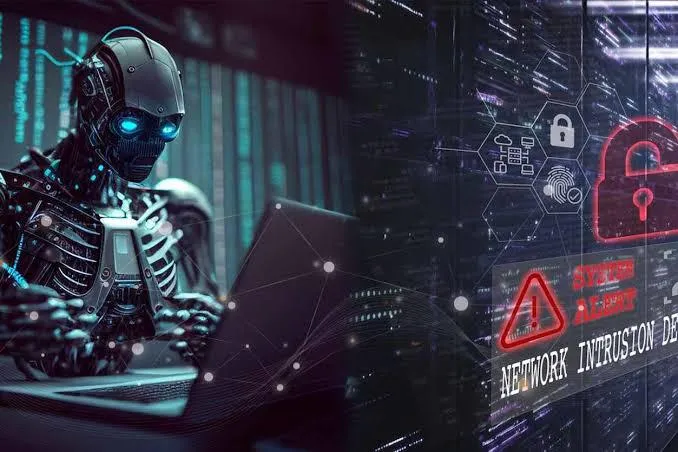
TABLE OF CONTENT
- How AI Gained Prominence In Cybersecurity
- How Attackers Use AI
- Phishing and Social Engineering
- Discovery of Automated Vulnerability
- Adaptive and Intelligent Malware
- AI-Enhanced Password Cracking
- Automated Attack Campaigns
- How Defenders Use AI
- Threat Detection and Prevention
- Automated/Incident Response
- Advance E-mail and Communication Filtering
- Behavioral Analytics and User Monitoring
- Predictive Security Intelligence
- Vulnerability Management and Security Testing
HOW AI GAINED PROMINENCE IN CYBERSECURITY
For decades, cybersecurity operated on relative straight forward principles of identifying malicious signatures, blocking bad actors, establishing perimeter defenses and investigating incidences after they occurred. This worked when threats were much simpler and there were manageable volumes of attacks with the review of security threats done by human analysts within business hours. However, the acceleration of digital transformation changed all these, when companies moved to cloud infrastructures and the old model of cyberthreat defense completely broke down. Also, security teams faced long delay in reviewing data because of the large volumes and critical threats that had gone unnoticed. Attackers stepped up their game using high end tools, encrypting communication and carried out investigation for months, and then out maneuvered security professionals. Thus, the old system of detecting threats or malware patterns became useless against these customized attacks.
AI emerged as the solution to this problem with machine learning algorithms analyzing millions of data points in real time and detecting subtle patterns that would naturally escape human detection. However, AI with each improvement in defensive capabilities encountered by attackers, had the latter adopting the same techniques for malicious purposes. Therefore, AI not only being a defensive innovation also became an offensive one.
HOW ATTACKERS USE AI
Phishing and Social Engineering
Traditional phishing campaigns cast wide nets with generic messages hoping a small percentage of recipients would fall for the obvious scams but AI-powered phishing operates differently. It uses language processing and large language models to create highly personalized contextual messages that are nearly indistinguishable from legitimate communications. Generative AI could analyze a target’s social media presence, professional history, communication style and company’s relationship to create custom-made phishing e-mails. For example, receiving an e-mail that references a recent project one posted on LinkedIn using the communication style of one’s manager, mentioning names of fellow colleagues and including believable requests that fits one’s role, which unknown to you are all generated by AI. The attacker can generate hundreds of such customized messages targeting everyone in the company with each personalized to its recipient as opposed to manually crafting a single generic phishing e-mail years back.
There is also the use of voice cloning stemming from deep fake technology which is used to generate convincing audio of executives or colleagues obtained from conference recordings and social media videos. Attackers can successfully use deep fake audio to impersonate the CEO to call the finance department to authorize fraudulent wire transfers. The finance employee hears what sounds like the CEO’s voice with the right accent, speech patterns and background mannerisms to request urgent payments to complete a confidential acquisition that has been in the pipeline.
The attackers can use Chatbots powered by conversational AI to answer questions, fine tune their approaches based on the victim’s responses, and guide targets through complex attack sequences. For example, an AI chat box impersonating IT support could walk an employee through “trouble shooting steps” that actually involve installing malware or revealing credentials. The victim experiences what feels like a natural conversation with a helpful colleague never suspecting that it interfaced with an algorithm.
Discovery of Automated Vulnerability
The race to discover and exploit software vulnerabilities has become a hallmark by attackers. Software contains bugs and some of those bugs create security vulnerabilities that attackers can exploit. Traditionally, finding these vulnerabilities required skilled security researchers to manually review codes, test inputs and analyze program behavior which was time consuming. Interestingly, AI has compressed this timeline from months or years into days or hours. High-end AI systems go beyond matching patterns to understand program logic, data flow and identify complex vulnerabilities that arise from the interaction of various functions or modules. AI not only identifies secured individual components, but can detect a specific sequence of operations that can be exploited. For example, the use of AI-powered fuzzing which simply throws massive amounts of unexpected input at software to trigger crashes or unexpected behavior that indicates vulnerabilities. This gives attackers the advantage of discovering zero-day vulnerabilities. When an attacker’s AI discovers a vulnerability before a defender’s AI, then the window has been opened where all users of that software are vulnerable.
Adaptive and Intelligent Malware
The days of static malware which security software could identify through signature matching are over. AI-powered malware can analyze its environment, make decisions about how to proceed, evade detection systems and adapt its behavior based on the defense it encounters. Self-modifying malware uses AI to rewrite its own code continuously, change its signature and structure to evade detection systems looking for known malware patterns. The malware learns from the defense mechanisms it encounters and adapts its strategy accordingly, behaves non-threateningly to avoid detection before activating its malicious payload in its target environment.
AI-powered ransomware can analyze a victim’s file system to identify the most valuable data (financial records, customer databases, intellectual property or vital business systems) and prioritize encrypting those assets to maximize leverage in ransom negotiations. The ransomware can estimate the victim’s ability to pay based on financial documents it encountered and adjusts its ransom demand accordingly and can predict which backups the victim is likely to have and target them specifically.
AI-Enhanced Password Cracking
Passwords remain a primary authentication mechanism across most systems, and AI has stepped up the attacker’s ability to crack them. Traditional password cracking relied on forcefully trying out every possible combination. This worked against weak passwords but struggled with complex ones. From previous data breaches, machine learning models could identify patterns in how humans created passwords. These learned patterns dramatically reduced the number of guesses required to crack passwords, turning what takes years of random attempts into hours of intelligent guessing.
Neural networks designed specifically for password cracking generated highly probable password candidates by learning the structure and patterns of human-created passwords. They could generate millions of passwords and rank them by probability, giving attackers the most likely passwords to crack accounts more efficiently than traditional methods.
Automated Attack Campaigns
Automated AI-driven attack campaigns can identify targets, conduct inspection, launch customized attacks and manage thousands of compromised systems simultaneously (all within minimal human intervention). This has changed cybercrime from a labor-intensive activity to a scalable industrial operation. AI-powered inspection bots can thoroughly map a company’s digital infrastructure such as catalogue technologies being used, employees e-mail addresses and social media profiles and open ports and services. These bots use machine learning to make intelligent decisions about where to focus their attention and which systems are most vulnerable within hours.
AI controlled botnets can analyze a target’s infrastructure, identify bottlenecks and weak points and dynamically adjust attack vectors when defenders implement filtering. If one attack vector gets blocked, the AI simply shifts to different protocols, ports or attack patterns probing for weakness in the defense put up by cybersecurity operatives. More attacks can lead to an unpredictable pattern flow which the security team might not anticipate or block. Inside the compromised network, AI can operate autonomously such as establishing persistent access to as many systems as possible across dozens of companies all at the same time.
HOW DEFENDERS USE AI
Threat Detection and Prevention
Human analysts cannot possibly review millions of daily events of users’ login, file access and network connections. AI- powered threat detection solves this problem by continuously analyzing activity patterns and flagging anomalies that warrant human investigation. Real-time network traffic analysis uses AI to inspect the massive volumes of data flowing through the company’s network, identifies patterns associated with malicious activity even in the absence of no known malware signature. AI can detect command-and -control communications where compromised systems are receiving instructions from attackers. It identifies data exfiltration attempts based on unusual outbound traffic patterns, flag encrypted communications to suspicious destinations and recognizes lateral movement of attackers spread through internal systems. This behavior-based detection catches threats that signature-based tools have missed. Overtime, AI has been able to distinguish genuine threats from benign anomalies, making an alert reaching a human analyst a real security issue that requires attention.
Automated/Incident Response
Speed is everything in cybersecurity. The “dwell time” (time attackers spend in networks before they are detected) determines how much damage they can inflict. The time interval between initial compromise and containment allows attackers to steal more data, employ additional backup doors or expand their foothold. AI-powered automated response compresses these timelines to minutes or even seconds. Security Orchestration Automation and Response (SOAR) platforms use AI to take immediate action when threats are detected without waiting for human approval.
It does this by automatically disabling a compromised user account based on anomalous behaviour by terminating active sessions, force a password reset and isolate the user’s devices from the network all within seconds of detection. Likewise, when AI detects a ransomware, it instantly quarantines the affected system, blocks network access to prevent spread, snapshots the system for forensic analysis and then alerts the security team within the blink of an eye.
Advance E-mail and Communication Filtering
AI powered e-mail security can detect threats that traditional filters miss and protect against AI-generated attacks. When attacks use AI to generate personalized phishing e-mails, defensive AI analyzes the content looking for the tell-tale signs of manipulation and social engineering that human recipients might miss. AI systems can detonate links in sandboxed environments to see what happens when clicked, analyze the destination site of malicious behavior, detect newly registered domains being used by phishing and identify call back mechanisms that allow attackers to track which recipients clicked.
Also, deep fake detection capabilities are developing to counter AI-generated voice and video attacks. They analyze audio and video for subtle artifacts that generative AI often leaves. Companies handling high value transactions are deploying these tools to verify that video calls with executives or voice confirmations of financial transactions come from real humans rather than AI-generated imposters.
Behavioral Analytics and User Monitoring
AI- powered behavioral analytics tracks hundreds of variables for each user- login times, locations, applications that have been accessed, transferred data volumes, e-mails sent and received and other countless actions. AI does not look at individual variables but understands the relationships and patterns among them. For example, a user who starts working midnight shifts not accustomed to such, begins unauthorized access to sensitive data, generating large amounts of outbound network traffic, would quickly raise concerns and automatically trigger an investigation.
Detecting insider threat is important because malicious insiders are authorized users exploiting legitimate access rather than external attackers who need to break parameters. AI behavioural analytics can identify insiders preparing to steal data (downloading unusual large volumes of files, copying data to personal storage or exhibiting behaviour patterns similar to previous insider threat cases). Privacy considerations are important when deploying behavioural monitoring systems because employees have concerns about surveillance and poorly implemented monitoring can create a toxic work environment. Human review should verify AI flagged incidents before taking action against employees so as not to mistake an unusual behavior done innocently as a threat and apply consequences on such employees.
Predictive Security Intelligence
AI systems continuously ingest threat intelligence from thousands of sources. For instance, monitoring the dark web, databases that are vulnerable, discussions on social media and then synthesizing same to actionable intelligence. AI identifies patterns of a new malware family emerging in underground forum, correlates it by exploring activities and scanning particular industries before attacks materialize. It predicts companies in that sector will face attacks using that malware within days or weeks. This advanced warning allows defense to be strengthened before attacks materialize. Emerging attack trends are identified which helps security teams stay ahead of threats rather than constantly reacting to them.
Vulnerability Management and Security Testing
AI systems analyze newly disclosed vulnerabilities considering multiple factors beyond just the vendor's severity rating. Is exploit code publicly available? Which systems in your environment are affected? How critical are those systems to business operations? What's the likelihood of successful exploitation given your other security controls? Do you have compensating controls that reduce risk? The AI synthesizes these factors into risk scores that reflect actual danger. An important rated vulnerability in an internet-facing system running vital services with active exploitation in the wild will be prioritized over an equally important rated vulnerability in an isolated internal system with no known exploits.
AI-powered tools can safely probe your defenses daily, attempting to exploit known vulnerabilities, test systems authentication, map network topology, identify privilege escalation paths, and discover misconfiguration without causing disruption in business activities. When new systems are deployed, configuration changes are made, or new vulnerabilities are disclosed, automated testing immediately assesses whether these create exploitable weaknesses. AI-powered security assessment continuously monitors cloud configurations, identifies security misconfigurations such as overly permissive access policies, unencrypted data stores, or missing security controls.
AI understands cloud service security best practices for AWS, Azure, Google Cloud, and other platforms, automatically scanning for deviations from secure configuration. When a developer spins up a new cloud resource with insecure default settings, the AI flags it within minutes rather than waiting for a quarterly security review to discover the exposure. Reduction in workload of the security team is a huge benefit of managing AI vulnerability. Security teams are generally understaffed, and manually assess and prioritize hundreds or thousands of vulnerabilities, which consumes enormous time. AI automation handles the tedious work of scanning, assessment, prioritization, and even remediation of certain vulnerability types. Security analysts can then focus their expertise on complex vulnerabilities that require human judgment and strategic security improvement rather than spending their days reviewing vulnerability scanner output and updating software.
In conclusion, the balance of power now depends on how effectively companies harness AI’s capabilities for defense while maintaining human oversight, ethical governance, and continuous innovation. As AI continues to develop, cybersecurity will remain a keen contest between Cybercriminals and Cyber professionals.
Stay ahead of cybercriminals by enrolling in Titans Careers comprehensive Cybersecurity course led by our expert tutor which will empower you with the knowledge to prevent and deal with cyber threats in the course of carrying out personal or company’s activities.