
Emotional Intelligence: A Fundamental Leadership Skill In Project Management
Discover how Emotional Intelligence (EQ) transforms project management by improving team dynamics, conflict resolution, and leadership effectiveness in challenging situations.
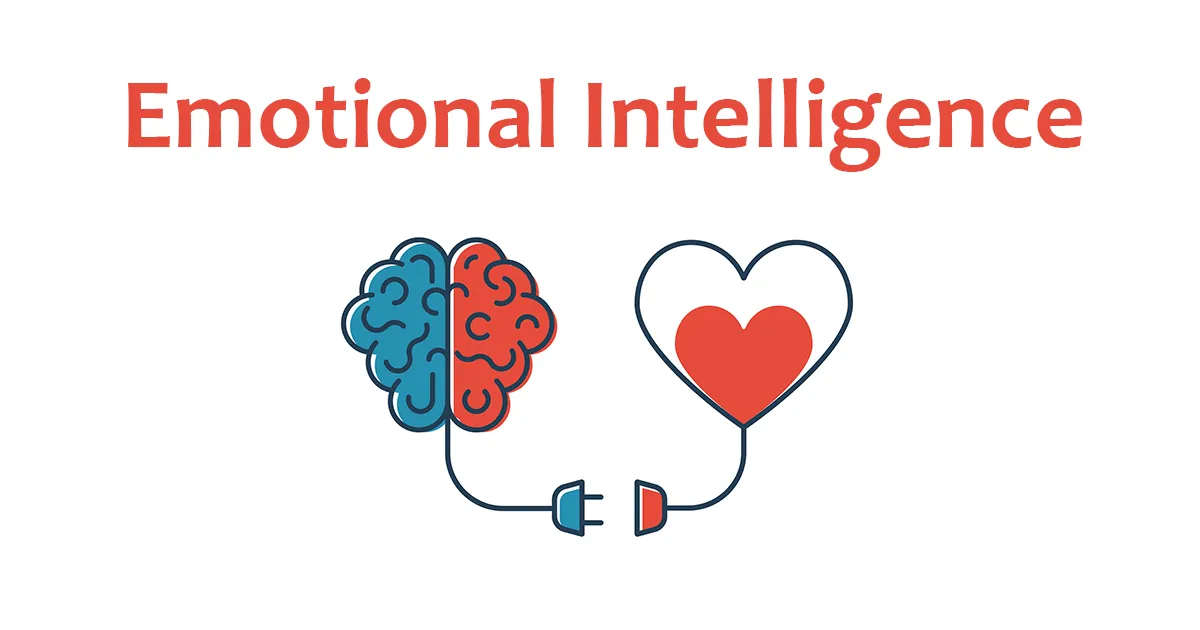
Emotional Intelligence: A Fundamental Leadership Skill In Project Management
You've worked hard to put together a project plan that is technically flawless, team members that are eager to commence work and of course, a generous budget to execute the project. Having received the greenlight, you dive in with a mandate to deliver optimally and within the stipulated time frame. However, along the way, miscommunication thrives, a key stakeholder is angry over a missed deliverable, scope creep is having a field day and the morale of the team is rapidly going down the hill. Apart from projects failing due to scope creep or technical issues, have you ever thought it failed due to collapse of human dynamics? Well, this where Emotional Intelligence (EQ) steps in to turn confusion into something more cohesive.
Project management is hinged on scope, time, and cost while leadership of a project revolves around guiding team members through the maze of uncertainty, resolving conflicts before they escalate, and building trust when stakes are high. Every leader who wants to successfully implement projects must have high emotional Intelligence (EQ).
Table of Content
- What is Emotional Intelligence (EQ)
- Components of Emotional Intelligence
- Why EQ is Non-Negotiable In Leadership
- EQ In Action
- Strategies To Build Your EQ
- EQ Myths
What is Emotional Intelligence (EQ)?
Made popular by Daniel Goleman, a psychologist, Emotional Intelligence also referred to as EQ is a skillset that empowers you with the ability to understand and manage your emotions, while recognizing and influencing the emotions of others around you. Over the years it has become a must have skill. The absence of EQ generally leads to conflicts and misunderstandings in the workplace while the presence of EQ unveils an effective resolution of same, the ability to remain calm under pressure and being empathic towards others.
Components of Emotional Intelligence
Goleman's EQ consists of five main components namely; Self-awareness, self-regulation, motivation, empathy and social skills (effective communication).
Self-Awareness
This serves as a radar for your emotions, strengths, and weaknesses. Here you are aware of your emotions and the effect it has on you and others (team's performance). Knowing this will help you adapt your leadership style to the needs of your team members in the face of the prevailing situation at hand. A project leader with a high EQ knows how to express his/her feelings while fully understanding the consequences their emotions can have.
Now Imagine as a project leader, you notice your frustration level is rising in a meeting. Instead of snapping, you instantly realize that this arose due to your fear of missing the stipulated deadline. Being aware of this, will make you pause, take subtle deep breaths and then respond constructively.
Self-Regulation
It allows you to personally, as it were, step on the brakes (emotional brakes) to prevent a mishap from occurring. Here you keep your emotions in check, manage them while maintaining a positive outlook in the face of a set-back. When you connect more with EQ you move from being reactionary to being responsive albeit positively. It becomes easier to solve problems because you've taken time to manage your emotions via using a deep breathing technique or going for a walk. Hence, rather than shouting and mirroring the conflict, you are calmer and can in the midst of chaos see a way out.
Take for instance, a situation where an important vendor is late in delivering the designated items, a leader who is on the low side when it comes to self-regulation will most likely blow hot and send an email blasting the vendor or get on the phone and yell, threaten and insult the vendor. However, a leader with high EQ will refrain from such impulse, remain calm and be solution oriented by asking "How do we solve it together?" since he/she is aware that ranting won't solve the problem.
Motivation
Everyone loves receiving bonuses and promotions, but this is generally based on performance. Motivation is what will drive you as the project leader to continue with a view to hitting the set goal(s). Imagine experiencing a delay that spans three months. Naturally, most people will throw in the towel but inner motivation will keep you focused and also inspire team members not to place great weight on the set back but on the impact that would be made in the long run. Motivation allows you to keep the towing the goal path, remain persistent during challenging times while a lack of it breeds discouragement and throwing in the towel.
Empathy
Things happen and as a leader you need to learn how to read the body language of team members. This where empathy comes in. It helps you feel and understand what team members are going through which makes it a whole lot easier to calmly resolve disputes. For instance, when a vibrant vocal engineer in meetings suddenly opts to remain silent, you need to decode that something is wrong and privately ask him. Through that, you will know what the issue(s) is/are on whatever front and you'll end up uncovering a vital technical risk others missed. A high Emotionally intelligent leader is approachable, and willingly listens, thus leading to collaboration among team members and fostering of unity.
Social Skills (Effective communication)
Leaders who possess this skill are approachable and easy to talk to. It enhances communication, increases power of influence, and comes in handy during conflict and relationship management among others.
Why EQ is Non-Negotiable In Leadership
Let's consider the domino effect where a leader has no regard for EQ; She continually dismisses a team member's concern tagging it as \"complaining.\" Then the employee disengages, a critical bug is missed which causes a £250,000 system outage. The consequence? Another round of reworking, damage of company's reputation, loss of talent, and distrust by stakeholders. On the flip side, high-EQ driven leadership results in team members experiencing less burn out as they can spot overload early, mediates a clash between marketing and engineering by focusing on shared goals and when a client angrily demands last-minute changes, the response is different. A low-EQ leader will react angrily and will escalate tension and conflict while a high-EQ leader will state that it has disrupted plans but will map out what's feasible by the designated deadline without compromising quality. This no doubt is the better response which will build trust and enhance business relationship.
EQ In Action
A low-EQ leader will always assign tasks in a robotic manner. When for instance, a developer asks for help, he/she generally replies \"Figure it out, your deadline is Thursday.\" Afraid of the consequences for failing to meet the deadline, the developer works sleepless nights, delivers buggy code, and then quits. However, a high-EQ leader deploys empathy and social skills to harness potentials. The project leader notices the developer is stressed and drafts in John to pair with him as his API experience could speed things up. This move, no doubt will build capability and loyalty.
Let's assume in a planning session, two architects, Tony and Sarah clash over mode of approach. The project leader with a low-EQ response would be \"Enough of arguing! We'll use the X system, end of discussion!\". Now with this resentment passed across, it has weakened any drive for collaboration. On the other hand, a High-EQ leader would respond \"Sarah, you're worried about scalability. John, you're prioritizing speed. Both really matter, so let's prototype both solutions and test benchmarks.\" Now this will validate both perspectives and drive data-driven decisions.
How on earth do you manage an angry CFO who storms into your office after a budget overrun and shouts: "This is highly unacceptable! You're misusing the funds! " If you're a leader with a Low-EQ, this will most likely be your reaction; "Sir, scope changes caused this!". Congrats! In one sweep, you've destroyed the trust he had in you. However, with a high EQ , you'll react this way: Empathize first: "Sir I know this impacts on financial targets, and that's stressful." Then switch to problem-solving mode, "Here's where funds went, and here's a revised plan with cost controls. Your input on priorities is very critical to the success of this project." This response rebuilds that partnership bond.
Then again, how do you handle a stakeholder that has zero EQ and says "I need this report for the Board on Monday, that's non-negotiable." What would be your reaction? Ahhhhhhhh! You'd certainly want to unleash your anger on him in many ways than one. What's the way forward? As tempting as it might sound to want to explode, don't respond angrily, just take a deep breath. Then invoke a collaborative way to solve the problem for e.g. "Sir, to hit your deadline, I suggest we focus on sections 1-3 first, can we defer Section 4?"
Strategies To Build Your EQ
Be Self-Aware:
Since self-awareness helps you understand how your emotions affect your behaviour, decision-making, and relationships, it's important to build same not by reacting but to first pause, reflect before making the right response. At the end of each day, you should pencil down what emotions you felt during key moments and how you reacted. Identify situations that make you frustrated, defensive, or overly excited (emotional triggers). When you identify them then it will be easy to manage. For instance, "Femi's feedback made me very angry and defensive? Was it his tone or my uncertainty about meeting the timeline?".
You can ask your colleagues or team members for their input with regards to how they perceive your reaction to situations. For instance, you could ask "What's that behaviour I have that helps or hinders the team in the execution of their duties?"
This ensures that you prevent frustration, stress or anger from dictating how you should act at any given point in time. If you remain calm in the midst of chaotic situations, you will gain the respect and admiration of others and also inspire them to act likewise. What can you do to harness this skill? When you feel an emotion has been triggered, take deep breaths or count to ten before responding. You should learn to delegate tasks and not commit to every single task just to please people. Make positive declarations that are solution driven and eject negative ones from your vocabulary for e.g. don't say "This delay will ruin us" rather say "This is a test of our dexterity. What's the way forward?"
Be Empathic:
EQ is efficiency prone and you need to understand the divergent perspectives of others, by listening during a one-on-one moment. For instance, when you ask, \"Beyond tasks, what's energizing or draining you this week?\" Listen without interrupting, make eye contact, then paraphrase what the person said to ensure you are on the same page. A 5-minute check-in with your team members can prevent weeks of burnout. For instance, being able to spot early stress signs helps in reallocating tasks, thus preventing what should have been a 3-weeks delay from work as a result of being sick. Ask team members how they're doing personally, not just professionally as this builds trust and a leadership style that is embedded in empathy.
You need to also observe body language such as a team member slumping during a presentation which may signal that he/she is overwhelmed. Follow up to know his/her thoughts about the workload. This will lead to earning their loyalty since they feel valued.
Improve Social Skills:
Having strong social skills enables leaders to build bonds, resolve conflicts, and positively influence others. Have one-on-one engagement and instead of criticizing, highlight what's working before suggesting improvements and address disputes quickly and fairly, while focusing on facts, not personalities.
You should give good feedback to team members that have done well for instance \"The way you documented that process saved the team 10 hours/month. That's a huge impact! Well done". Leaders with strong social skills encourage collaboration instead of competition. Furthermore, not everyone is vocal during meetings especially introverts. To bring such on board you can ask for instance, "Rachel, we haven't heard from you, what's your take on X?" This will make her come out of her shell to contribute meaningfully to the discussion at hand.
Build Motivation
Leaders with high EQ can inspire team members. You should celebrate wins no matter how small, for instance, commending Patrick's diligence which led to a winning situation e.g. \"The deployment succeeded because of Patrick's midnight debugging. That's commitment!\" Patrick will certainly be motivated to do more.
You need to think about what type of leader you want to be, is it one that inspires others or makes them run away after seeing all doom and gloom. Humanize your interaction with them, speak about your challenges and how you overcame, be approachable, and friendly. You will become their role model and help them develop that inner winning mentality that they never had.
EQ Myths
Here are some myths about EQ:
Myth: Those who are emotionally Intelligent are always nice. EQ is not about being nice. It's about recognizing, managing, and expressing emotions efficiently for increased collaboration and productivity. Yes, they'll engage in tough conversations, set boundaries, and even say "no" when necessary. So being nice is really a myth.
Myth: High EQ Means You're Being Overly Emotional or Weak. In fact, the opposite is the case. Emotional intelligence helps leaders stay calm under pressure, make the right decisions, and influence others positively. These are certainly signs of strength and not weakness.
Myth: You're born with EQ, It Can't Be Developed. Emotional intelligence is a skill that can be learnt, practiced, and with time, improve tremendously. It certainly won't happen over-night, but the more you practice self-awareness, self-regulation and motivate yourself, you'll begin to see changes in how you respond to and handle challenging situations.
Myth: EQ is More Important Than IQ. None is more important than the other, as both are highly valuable. IQ helps with problem-solving and technical expertise, while EQ drives leadership, communication and perseverance.
Myth: EQ Can't Be Measured. It can be hard to measure, since you won't know how good (or bad) you are at recognizing your own emotions and those of others. However, there are validated assessment tools that measure EQ with high accuracy.
Myth: EQ Is Relevant In Personal Relationships Only. Emotional intelligence is very important in professional relationships as well, whether it's leading the team into negotiating deals, handling conflicts, or managing stress at the workplace, it's importance can't be undermined.
Conclusion
Emotional intelligence directly impacts how you inspire, manage, and guide your team. By harnessing the power of self-awareness, practicing empathy, improving communication, and managing stress while remaining composed, leaders can create an environment where trust, collaboration, and innovation thrive. Bear it in mind that leaders are not remembered only for the strategies they implemented but also for the way they made others feel.
At Titans Careers, as a project manager or aspiring one, we help you sharpen this important leadership skill via the project management course taught by our seasoned expert in the field. Enroll now and start leading with confidence, clarity, and compassion.
For more enquiries, you can send an e-mail to: info@titanscareers.com or chat with us on WhatsApp
Future Reading
- Project Management: 8 Proven Ways To Overcome Challenges In Modern Organizations
- Project Management: Managing Scope Creep In 2025